Beyond the desk · Passion 04
River & pond
fishing
Patience and a good read of the water. No dashboards, no queue, no notifications — just two very different ways of fishing, and a healthy respect for the fish and the water they live in.
Two ways of fishing
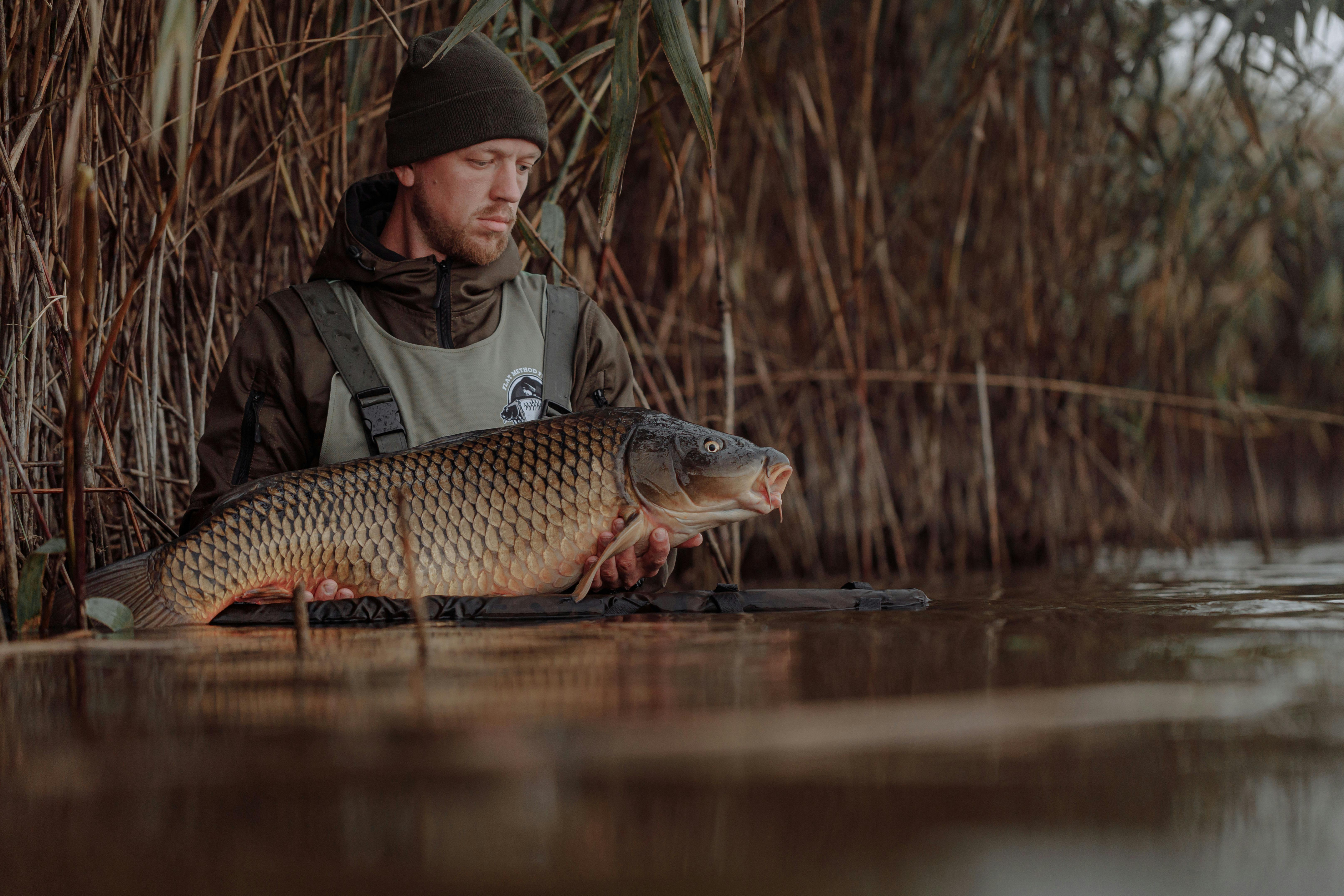
Method-feeder, catch-and-release
My easy-going style: settle in on the bank with a method feeder rig, cast for carp and tench, and let the session unfold at its own pace. Every fish goes back. It is as much about the wait and the setting as the catch.
Lure fishing, shore and boat
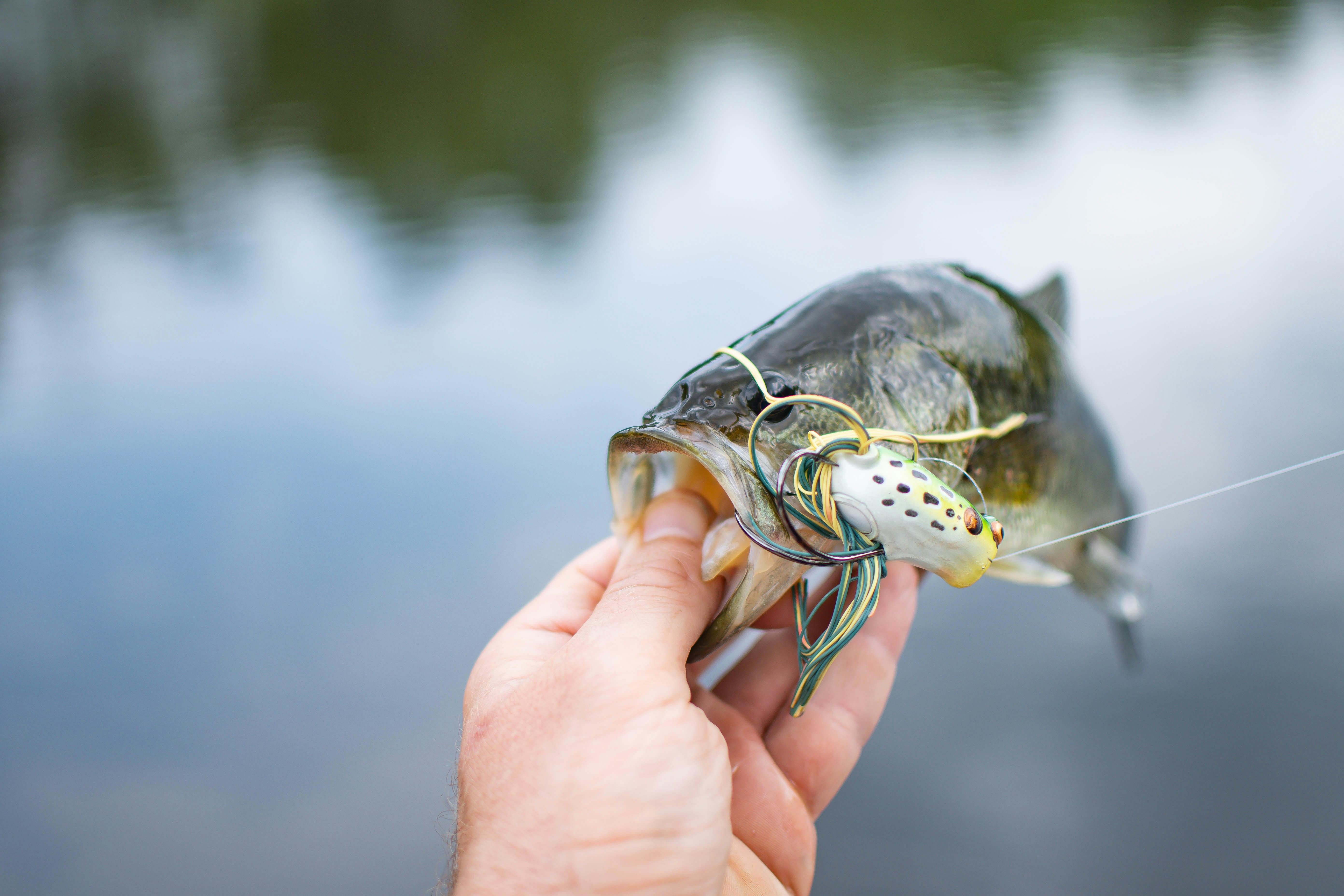
The more active side: working soft and hard lures from the bank or, a lot of the time, from a boat — covering more water, reading structure, and reacting to a strike rather than waiting for one.

Casting for predators, season by season
When I switch to lures, five species make up most of what I’m after, and each one has its own rhythm through the year. Pike and zander are covered by a legal closed season in 2nd-category water; perch, wels catfish and asp are not — but I still check the current prefectural order before every trip, since dates and minimum sizes are set year by year.
| Species | Best season | Moselle, 2nd category |
|---|---|---|
| Pike (brochet) | Early autumn (Sept–Nov) and the first weeks after the spring reopening | Closed season: late Jan to late April (for 2026: closed 1 Feb–24 Apr, open 25 Apr 2026–31 Jan 2027). Minimum size 60 cm. |
| Zander (sandre) | Late summer into autumn, most active around dusk | Same closed season as pike, grouped as “carnassiers”. Minimum size 50 cm. |
| Perch (perche) | No closed season — worth targeting all year, especially when shoals group up in autumn and winter | No legal closure in 2nd category. |
| Wels catfish (silure) | Warm months, June–September, mostly at dusk and after dark | No legal closure in 2nd category. |
| Asp (aspe) | Spring, April–June, during the spawning run — a great topwater target | No legal closure in 2nd category. |
Closed seasons and minimum sizes are set every year by prefectural order — I check the current one via the Fédération de pêche de la Moselle before each trip, not just this page.
Where I fish: the GVOC waters
Most of my sessions happen on water managed by the GVOC — Groupement de la Vallée de l’Orne et Conroy, the local AAPPMA (approved fishing association) based near Amnéville in Moselle. Holding their card gives access to a set of ponds and stretches of the Orne valley and the Moselle, on top of whatever the department-wide rules already require.
[googlemaps https://www.google.com/maps/d/embed?mid=1LRpwOCC2xmdvyMmQ0i9QNkT6HKTRkDCm&w=900&h=600]
Map: GVOC fishing grounds, on Google My Maps (opens the source map if the embed above doesn’t load).
Fishing responsibly in the heat
One rule I keep to: no fishing during heatwaves. Carp and tench spend hot spells holding low, in cooler, better-oxygenated water near the bottom. Hooking one and bringing it up into warm, oxygen-poor surface water puts real stress on the fish, and can leave it unable to recover properly once released — the opposite of what catch-and-release is meant to achieve.
Heatwaves also encourage cyanobacteria (harmful algae) blooms in still and slow-moving water. When there is any sign of a bloom, I don’t fish that water at all, for the fish’s sake and my own.